I recently went through an interesting scenario with American Express. I have been a customer of theirs for 10 years now. I had a balance of $5,200 as of a few months ago. I contacted customer service to inquire about settlement options with my account. I have been out of full time work for over a year now and wanted to explore my options. This card is my only open credit card and I planned to keep it open after paying off the balance.
The customer service rep was very helpful. We spoke a few times over four days. He explained the process to me and told me I would need to apply for a settlement amount and he would let me know if I was approved or not. A few days later, after thinking the process through, I chose to continue paying down my full balance as that was the only correct solution, after all, I did charge the amount to my card, I do not expect someone else to pay my debt.
A day later, I received a notice in the mail that because I had applied for a settlement approval my card was canceled. Also, my interest rate went from 12.99% to 27.9%! I immediately contacted customer service again. Explaining I was not aware that by simply applying for a settlement my account would be closed. I was aware that if I accepted it that would be the case.
Long story short, after 10 years as a loyal customer, the door was slammed shut on me. I was current on my account, I was proactive in contacting them to discuss options. I did not accept the settlement, I am aggressively back to a debt snowball attacking this final credit card balance and will never look back. Adios American Express, thanks for nothing!
Tuesday, December 29, 2009

How to keep up your credit score
Source: www.Freep.com
These days, a good score is around 720 points or higher. Here are some tips to help you maintain or improve your credit score:
• Do not apply for several credit cards. Applying for a store credit card could cut 10 points off the credit score of some consumers with good credit.
• Pay all bills on time -- utilities, mortgage, credit cards, etc. Lenders customarily don't report you as late to the credit bureaus until you have missed the original due date by at least 30 days. Being a month late with all payments, for example, might lower a credit score by from 60 to 110 points.
• Missing a payment on one account that wasn't already late could slice 40 to 75 points from some credit scores.
• Keep your credit card balances low on all cards, much lower than half of the available limit on your credit cards. Maxing out can cut credit scores by 45 to 100 points.
• Negotiating a debt settlement with creditors can lower some credit scores by 45 to 125 points. A short sale on a home would be reported as a debt settlement.
• A loan modification to get a lower mortgage payment and stay in your home could impact your credit score. In some cases, consumers could see credit scores drop by 100 to 150 points.
• Having your home foreclosed on could knock 45 to 100 points off your credit score, depending on where your score started.
• Filing for bankruptcy will hurt some credit scores by 195 to 255 points.
These days, a good score is around 720 points or higher. Here are some tips to help you maintain or improve your credit score:
• Do not apply for several credit cards. Applying for a store credit card could cut 10 points off the credit score of some consumers with good credit.
• Pay all bills on time -- utilities, mortgage, credit cards, etc. Lenders customarily don't report you as late to the credit bureaus until you have missed the original due date by at least 30 days. Being a month late with all payments, for example, might lower a credit score by from 60 to 110 points.
• Missing a payment on one account that wasn't already late could slice 40 to 75 points from some credit scores.
• Keep your credit card balances low on all cards, much lower than half of the available limit on your credit cards. Maxing out can cut credit scores by 45 to 100 points.
• Negotiating a debt settlement with creditors can lower some credit scores by 45 to 125 points. A short sale on a home would be reported as a debt settlement.
• A loan modification to get a lower mortgage payment and stay in your home could impact your credit score. In some cases, consumers could see credit scores drop by 100 to 150 points.
• Having your home foreclosed on could knock 45 to 100 points off your credit score, depending on where your score started.
• Filing for bankruptcy will hurt some credit scores by 195 to 255 points.
Tuesday, October 20, 2009
Credit Card fees for paying your balance monthly

USATODAY reports that Bank of America and Citigroup plan to impose new fees on their credit card customers starting in 2010.
Citigroup has already started charging an annual fee to those customers who do not charge at least a certain amount, around $2,400 on their cards annually. Bank of America is said to start charging a fee ranging from $29 to $99 for those customers who pay off their balance every month avoiding interest payments.
To me this is one more reason to NOT use a credit card. For those who insist you must have at least one to maintain a good FICO score, I challenge that by reminding you it is possible to maintain a high credit score using other means and never need to pay the credit card company another dime.
Citigroup has already started charging an annual fee to those customers who do not charge at least a certain amount, around $2,400 on their cards annually. Bank of America is said to start charging a fee ranging from $29 to $99 for those customers who pay off their balance every month avoiding interest payments.
To me this is one more reason to NOT use a credit card. For those who insist you must have at least one to maintain a good FICO score, I challenge that by reminding you it is possible to maintain a high credit score using other means and never need to pay the credit card company another dime.
See the USATODAY article here
Friday, October 2, 2009
Stop Acting Rich: And Start Living Like A Real Millionaire
Thomas J Stanley has a new book, Stop Acting Rich: And Start Living Like A Real Millionaire
Some of you may have read his previous best sellers, The Millionaire Next Door or The Millionaire Mind
I plan to add Stop acting rich to my reading queue later this month. This looks like a great read and will only reinforce what I have learned this past year about basic financial fitness for me and my family.
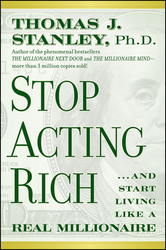
"Stop Acting Rich...And Start Living Like a Real Millionaire" (October 2009; Wiley; $26.95; 978-0-470-48255-1; Hardcover) exposes the huge gap between what we think "rich" looks like versus what it actually is. Dr. Thomas Stanley's research and the national survey carried out on his behalf by University of Georgia Survey Research Institute rips the lid off just about every assumption we have about who the really rich are (and aren't), what they do (and don't do) and what they buy (and don't buy).
In "Stop Acting Rich," Dr. Stanley explores the profile, professions, and psychology of the typical status-and-brand-obsessed U.S. consumer. He uncovers who the most successful wealth accumulators are - not doctors and lawyers or business professionals, but educators, engineers and farmers. Funeral directors, for example, are better at accumulating wealth than doctors even though their income ranks well below doctors.
Some of you may have read his previous best sellers, The Millionaire Next Door
or The Millionaire MindI plan to add Stop acting rich to my reading queue later this month. This looks like a great read and will only reinforce what I have learned this past year about basic financial fitness for me and my family.
Hoboken, NJ (PRWEB) September 30, 2009 -- In his most timely book to date, "Stop Acting Rich...And Start Living Like a Real Millionaire," #1 New York Times bestselling author of "The Millionaire Next Door" and "The Millionaire Mind," Thomas Stanley reveals the results of a major survey which uncovers the sharp differences between the spending habits of real millionaires versus those who are just "acting rich." The steep price we're paying for the credit crisis begs the question: what led so many Americans to spend so far beyond their means? Why did so many buy into the myth that hyper spending like the rich would somehow convey real wealth? It turns out that the big spenders aren't who we thought they were. The "aspiring rich" far outspend real millionaires, who rarely spend above their means regardless of the extent of their wealth. As a result, they've mortgaged their future on an illusion.
Stop Acting Rich
"Stop Acting Rich...And Start Living Like a Real Millionaire" (October 2009; Wiley; $26.95; 978-0-470-48255-1; Hardcover) exposes the huge gap between what we think "rich" looks like versus what it actually is. Dr. Thomas Stanley's research and the national survey carried out on his behalf by University of Georgia Survey Research Institute rips the lid off just about every assumption we have about who the really rich are (and aren't), what they do (and don't do) and what they buy (and don't buy).
For example:
|
In "Stop Acting Rich," Dr. Stanley explores the profile, professions, and psychology of the typical status-and-brand-obsessed U.S. consumer. He uncovers who the most successful wealth accumulators are - not doctors and lawyers or business professionals, but educators, engineers and farmers. Funeral directors, for example, are better at accumulating wealth than doctors even though their income ranks well below doctors.
The book makes clear the greatest cause of our financial woes: residence, but it's not only the price of our home, it is also where we live. Live in an upscale neighborhood and you will spend more on everything from your car to your haircuts. Successful wealth accumulators understand that keeping up with the Joneses is a drain. Far better to live in a community where the neighbors' net worth is lower than theirs and Grey Goose is not on the menu.
By revealing the truths about what millionaires really spend their money on, and how the rest of us spend in an illusory attempt to emulate them, Dr. Stanley has written an important, must-read book that will transform the debate about America's hyper consumer culture, and show us all how get on the right path toward attaining genuine, long-lasting wealth now and for the future.
US Auto sales down 23% do they still consider CARS a success?
Forbes.com reports today that GM auto sales are down 45% for September 2009.
Blaming both 'weak consumer confidence AND the conclusion of the government's Cash for Clunkers program'.
As I read the article I wonder how can it be both? If consumer confidence was that weak, how did the sheep in the media and the government claim the CARS program was such a success? Most of us knew CARS was a temporary plug in the bleeding that are US auto sales. Septembers numbers verifies that without a doubt.
Personally, I think the market is getting closer to where it should be, closer to reality. Automakers need to learn to survive making LESS cars. Such a large number of new car buyers have no business stepping foot into a new car showroom to begin with, it sounds like less and less of them are each month which can be a good thing in the long run.
See the article on Forbes.com
Blaming both 'weak consumer confidence AND the conclusion of the government's Cash for Clunkers program'.
As I read the article I wonder how can it be both? If consumer confidence was that weak, how did the sheep in the media and the government claim the CARS program was such a success? Most of us knew CARS was a temporary plug in the bleeding that are US auto sales. Septembers numbers verifies that without a doubt.
Personally, I think the market is getting closer to where it should be, closer to reality. Automakers need to learn to survive making LESS cars. Such a large number of new car buyers have no business stepping foot into a new car showroom to begin with, it sounds like less and less of them are each month which can be a good thing in the long run.
See the article on Forbes.com
Friday, September 11, 2009
A chance to win $999 every day!

If you follow Dave Ramsey and his money saving techniques, you are aware of baby step one, establish a $1,000 emergency fund as quickly as you can. How long did it take you to setup your fund? For some it took a week, for others a few months.
Dave Ramsey is giving everyone a head start in their baby step plan, he is giving away $999 every day from September 9, 2009 through September 17, 2009! I heard a caller win last night as Dave added one dollar to make it a cool $1,000, just for sending a text or visiting their web site (link below).
Feel free to visit the web site HERE for details and to register once each day.
Be sure to let us know if you win your emergency fund!
Friday, August 14, 2009
Basic auto maintenance can save you money
 So you are doing the right thing, driving a vehicle that is paid for, not carrying a car payment, how do you keep that car dependable and not go broke in the process? The key is proper maintenance.
I am not talking about cosmetic investments that have nothing to do with the operation of the vehicle, this is about the maintaining safe drivability. Efficiently getting you from point a to point b on a daily basis.
Just like your household budget, it is important to put the most important items first on the list. I consider these to be items like brakes, tires and suspension components. If one of these fail at speed, you run the risk of a very serious accident.
The next area to invest in would be engine/transmission related. These items wear and should be inspected and replaced on a scheduled basis, refer to your vehicle owners manual to see what is recommended for your specific vehicle. Included are things like belts, radiator & hoses, changing the air filter, oil filter, engine oil, transmission and differential fluids.
Monday, August 3, 2009
Still thinking about participating in the CARS program?
Watching this Fox news clip should have you thinking twice
Friday, July 31, 2009
Why we are paying illegal interest rates
Interesting video. One more reason to pay your balance off or not use credit cards at all.
$2B more pumped into Cash for Clunkers CARS program
Today the House has approved moving $2 Billion more tax payer money to the CARS program. This is a program designed to stimulate the sales of new cars from dealer lots. Foreign and domestic, your choice. You turn in your older car (that meets a set of criteria) to the dealer and they give you $3,500 - $4,500 off the price of a new car. The government reimburses the dealership from the funds provided.
This plan was put on hold late last night because the demand was so strong, the system setup by the government to process the applications was seriously backlogged not to mention it looked like the first Billion dollars was close to being used up.
Today, instead of keeping this debt creating program on hold while they catchup on applications and improve the system, they are throwing MORE money at this problem.
When will people learn? Just because it is on sale, does not mean you go into debt to buy it...
This plan was put on hold late last night because the demand was so strong, the system setup by the government to process the applications was seriously backlogged not to mention it looked like the first Billion dollars was close to being used up.
Today, instead of keeping this debt creating program on hold while they catchup on applications and improve the system, they are throwing MORE money at this problem.
When will people learn? Just because it is on sale, does not mean you go into debt to buy it...
Monday, July 27, 2009
Consumer Assistance to Recycle and Save (CARS) Act
 Most of us have heard the 'Cash for Clunkers' or CARS bill has passed, today was the first official day for using these funds to buy a new vehicle.
This has been passed under the guise of creating more jobs and helping stimulate the auto industry by getting people into showrooms to buy more new, fuel efficient, vehicles. Lets call this what it is, another waste of tax payer money to entice people who cannot other wise afford it, to buy a new vehicle and take on a new car note, one of the worst investment opportunity out there today.
Chances are if your primary mode of transportation is worth $4,500 or less there is a reason you do not have a new car in your driveway...
The program details:
The program is authorized from July 1 to November 1, 2009 with $1 billion in emergency funding, or until funding runs out, whichever comes first.
Trade-in Vehicle Requirements
- Be in drivable condition
- Be continuously insured and registered to the same owner for at least one year
- Have a combined fuel economy value of 18 mpg or less (Work trucks must be pre-2002 regardless of mpg)
- Not be more than 25 years old with historic or aesthetic value. These vehicles are valued by hobbyists or are a valuable source of restoration parts.
New Vehicle Requirements
- The new vehicle must have a BASE manufacturer's suggested retail price of less than $45,000.
- New passenger cars with mileage of at least 22 mpg are eligible for vouchers. If the mileage of the new car is at least 4 mpg higher than the old vehicle, the voucher will be worth $3,500. If the mileage of the new car is at least 10 mpg higher than the old vehicle, the voucher will be worth $4,500.
- New small trucks or SUVs with mileage of at least 18 mpg are eligible for vouchers. If the mileage of the new truck or SUV is at least 2 mpg higher than the old vehicle, the voucher will be worth $3,500. If the mileage of the new truck or SUV is at least 5 mpg higher than the old vehicle, the voucher will be worth $4,500.
- New large trucks (pick-ups and vans weighing between 6,000 and 8,500 pounds) with mileage of at least 15 mpg are eligible for vouchers. If the mileage of the new truck is at least 1 mpg higher than the old truck, the voucher will be worth $3,500. If the mileage of the new truck is at least 2 mpg higher than the old truck, the voucher will be worth $4,500.
- Consumers can trade in a pre-2002 work truck (defined as a pick-up truck or cargo van weighing from 8,500-10,000 pounds) and receive a voucher worth $3,500 for a new work truck in the same or smaller weight class. There are no EPA mileage measures for these trucks; however, because newer models are cleaner than older models, the age requirement ensures that the trade will improve environmental quality. Consumers can also “trade down,” receiving a $3,500 voucher for trading in an older work truck and purchasing a pick-up or van weighing between 6,000-8,500 lbs.
- The mpg values are EPA combined city/highway fuel economy as posted on the window sticker of new vehicles and can be found at fueleconomy.gov
For full details visit www.cars.gov
Friday, July 24, 2009
Keys to motivation
Patricia Hill, from the Charlotte Examiner, has a few tips to keep you motivated on your path to becoming debt free. One of her suggestions is to learn to say 'no' when friends or family invite you to go to things like sporting events or concerts.
Some others are directly related to basic goal setting, accountability, reminders and progress measurements.
See the article here
Some others are directly related to basic goal setting, accountability, reminders and progress measurements.
See the article here
Thursday, July 23, 2009
Dave Ramsey in Michigan

For you Michigan readers, August 29, 2009 Dave Ramsey will take his Total Money Make Over Live event to Plymouth at the Compuware Arena!
Checkout www.DaveRamsey.com for details. We attended his show in Grand Rapids in February 2009 and strongly recommend ANYONE to attend if you have read his books or not.
Dave says, "If you really want to get out of debt, you've gotta get MAD. You've gotta get wired up and fired up. You've gotta sell so much stuff, the kids think they're next." We see it every single event. People come to the event depressed and beaten down by debt, but they leave with hope and determination to eliminate it.
Experience it all for yourself by attending Dave Ramsey's LIVE Event.
Wednesday, July 8, 2009
Mint.com Personal Finance Manager

I started using the personal finance manger at www.Mint.com this week. I am still setting up my accounts and information. A friend recommended it, it is working very well for him. Is anyone out there currently using this?
Mint.com is the nation’s leading online personal finance service, providing 1 million users a fresh, easy and intelligent approach to money management. And it’s free. Mint is tracking over $50 billion in transactions, $15 billion in assets and has identified $100 million in potential savings for its users.
Designed to be effortless, Mint.com takes less than five minutes to set up. Users register anonymously using only a valid email address. Mint then does the rest, securely downloading transaction data from more than 7,500 bank, credit card and investment accounts on a daily basis. Users never need to import or synch their data. Mint applies patent-pending technology and proprietary algorithms to categorize transactions; provide a unified view of all account activity; alert users to low balances, bank fees, upcoming bills, and even potentially suspicious account activity; and give users personalized suggestions for significant savings opportunities. Each user can monitor their total net worth, virtually real time, at www.mint.com, from any mobile phone (by texting short code MyMint [696468]), or by using Mint.com’s iPhone application – rated #1 in the Finance category in iTunes on the day of its launch.
Mint.com is rated top in its category by Kiplinger, Money, PC World and PC magazines, was named one of the 50 Best Websites of 2008 by TIME magazine, and has received four Webby awards, a Thomas Edison award, an American Business Award and accolades from the Wall Street Journal, BusinessWeek,TechCrunch, and Lifehacker, since its September, 2007 launch. The company was named one of 34 international Technology Pioneers by the World Economic Forum in 2008 and publishes an award-winning personal finance blog at www.mint.com/blog/ .
Saturday, June 13, 2009
Selling on ebay to supplement the income
I began listing items to sell on ebay again this past week to supplement the household income. I treat it like a hobby with benefits, best way to justify the work involved in research, listing, taking pictures, invoicing and shipping.
Anyone else use ebay to help sell unwanted items or items you find on clearance at your local stores? Post a comment about your experiences.
Feel free to browse my current listings shown at the bottom of the page!
Anyone else use ebay to help sell unwanted items or items you find on clearance at your local stores? Post a comment about your experiences.
Feel free to browse my current listings shown at the bottom of the page!
Monday, June 1, 2009
Ebay's deal of the day
We are all watching how we spend our money, one feature I recently found is the
Ebay displays current listings with deep discounts and FREE shipping. I check this site frequently when I am looking for items online and there have been some nice deals recently.
Here are two examples I saw today:
for $59.99
for $19.95
Ebay displays current listings with deep discounts and FREE shipping. I check this site frequently when I am looking for items online and there have been some nice deals recently.
Here are two examples I saw today:
for $59.99
for $19.95
Important infomation about Identity Theft Protection companies
Companies that sell "identity-theft protection" present an alluring but questionable proposition.
For as much as about $100 per year, the main thing they do is set fraud alerts that force banks to call people before new lines of credit are opened in their names. The alerts can be useful - but people can set them themselves, for free.
Now even that function could be taken away from the ID theft-prevention services.
A federal court in California has blocked Tempe, Ariz.-based LifeLock, one of the industry's biggest players, from setting fraud alerts with Experian, one of the three main credit-reporting agencies that manage the fraud alerts.
Experian is suing LifeLock, claiming that LifeLock's automatic renewal of customers' fraud alerts - which happens every 90 days, when they expire - costs Experian millions of dollars in processing expenses.
Click here to read the entire articleThursday, May 28, 2009
Why you should never rely on only one source
It’s fine to have a source that you prefer above others, but you need to remember that they are not infallible. They don’t know you, or how much money you have to invest or lose, or how much debt you have, or any of the extenuating circumstances that make your situation unique. Their advice is often generic and tailored to a mass audience, which may or may not include you. Any expert is merely making an educated guess based on the information they have and the trends they see. Some are better at reading the trends and information than others. Since none of them have a crystal ball, they cannot know the future for certain. And you shouldn’t assume that they do.
So if no one can be trusted one-hundred percent, what can you do to keep yourself form being victimized by a clueless talking head? First, don’t take anything any expert or media outlet says as the gospel truth. Even if they were right in the past, that’s no guarantee that they will be right in the future. Listen and learn from your preferred source, but remember that they are making educated guesses and are not certain what the future will bring. Also keep in mind that they do not know your specific financial/investing situation, so their ideas may not apply to you.
Second, educate yourself. The more you know about finance and investing, the better you become at interpreting trends and information for yourself. Since you know your situation better than anyone else, you can take the information you receive and determine whether any of it applies to you or is useful for you. When you are educated about finance, you can watch/read the experts with a critical eye and get a feeling for whether the information is junk, or if there’s something to it. Education can make you into your own expert, reducing the need to rely on the opinions of others who don’t know you or your situation.
Third, use a variety of sources in your financial planning. The best thing you can do to protect yourself from incorrect information is to use multiple sources for your information. Read a variety of magazines and books. Watch different television stations. Listen to several different gurus. All channels, authors, and experts have their own political, religious, or sponsorship affiliations and agendas that lead them to report things in ways that meet those agendas. By using multiple sources, you get a more complete picture of a situation. You get beyond the picture that one station/expert wants you to see and you see how the situation resonates with different groups. This complete picture can lead you to make better financial decisions than if you only had one side of a story.
Click here to read the entire article
So if no one can be trusted one-hundred percent, what can you do to keep yourself form being victimized by a clueless talking head? First, don’t take anything any expert or media outlet says as the gospel truth. Even if they were right in the past, that’s no guarantee that they will be right in the future. Listen and learn from your preferred source, but remember that they are making educated guesses and are not certain what the future will bring. Also keep in mind that they do not know your specific financial/investing situation, so their ideas may not apply to you.
Second, educate yourself. The more you know about finance and investing, the better you become at interpreting trends and information for yourself. Since you know your situation better than anyone else, you can take the information you receive and determine whether any of it applies to you or is useful for you. When you are educated about finance, you can watch/read the experts with a critical eye and get a feeling for whether the information is junk, or if there’s something to it. Education can make you into your own expert, reducing the need to rely on the opinions of others who don’t know you or your situation.
Third, use a variety of sources in your financial planning. The best thing you can do to protect yourself from incorrect information is to use multiple sources for your information. Read a variety of magazines and books. Watch different television stations. Listen to several different gurus. All channels, authors, and experts have their own political, religious, or sponsorship affiliations and agendas that lead them to report things in ways that meet those agendas. By using multiple sources, you get a more complete picture of a situation. You get beyond the picture that one station/expert wants you to see and you see how the situation resonates with different groups. This complete picture can lead you to make better financial decisions than if you only had one side of a story.
Click here to read the entire article
Credit Cardholders' Bill of Rights
From Senator Carl Levin (MI):
Earlier this week, Congress passed landmark legislation that substantially reforms the way credit card companies do business with their customers. I had the pleasure of attending the culmination of our work earlier today as President Obama signed the Credit Card Accountability, Responsibility, and Disclosure Act of 2009 (CARD Act) into law (P.L. 111-24). This law is the result of a comprehensive effort by many in Congress to protect consumers from some of the most egregious and unfair credit card practices common in the industry today.
I have been concerned about abusive credit card practices for years. In 2005, in response to numerous complaints from credit card holders about unfair practices involving interest rates, fees, and disclosure practices, I asked the Government Accountability Office (GAO) to investigate the matter and to issue a report with their findings. In 2006, the GAO issued that report, which detailed the fees, interest rates, and practices associated with 28 popular credit cards and the profits they were producing for six large credit card issuers.Those findings prompted me to initiate an investigation into the practices of the credit card industry through the Permanent Subcommittee on Investigations (PSI), of which I am the Chairman. In May 2007, in response to the abuses brought to light through PSI’s extensive work, I introduced the Stop Unfair Practices in Credit Cards Act (S.1395). This bill sought to ban some of the most abusive credit card practices that unfairly deepen or prolong credit card debt held by consumers. Although this bill was not enacted, we did not give up.
This Congress, I teamed up with Senator Chris Dodd (D-CT), Chairman of the Senate Banking, Housing, and Urban Affairs Committee, to introduce the Dodd-Levin CARD Act of 2009 (S.414). Our legislation provided the foundation for the compromise bill that was signed into law today. Although not as strong as the original Dodd-Levin bill, the compromise still puts an end to a host of unfair credit card practices that mire millions of families in debt. Under this law, for example, credit card companies are prohibited from hiking interest rates retroactively on existing credit card debt for cardholders who play by the rules and from imposing interest charges on debt that was repaid on time. Cardholders who paid late and had their interest rates hiked could be able to restore their prior rates if they pay the minimum amount on time for six months. The bill also requires credit card companies to send out bills 21 days before the bill is due and to apply cardholder payments first to the debt with the highest interest rate.
As many in Michigan continue to struggle through the worst economic conditions they have faced in their lifetimes, this law will put an end to a host of deceptive and unjust credit card practices that compound the financial hardship of consumers who are doing their best to stay afloat. This is a good day for consumer rights and protections, and I am pleased our perseverance has paid off.
Earlier this week, Congress passed landmark legislation that substantially reforms the way credit card companies do business with their customers. I had the pleasure of attending the culmination of our work earlier today as President Obama signed the Credit Card Accountability, Responsibility, and Disclosure Act of 2009 (CARD Act) into law (P.L. 111-24). This law is the result of a comprehensive effort by many in Congress to protect consumers from some of the most egregious and unfair credit card practices common in the industry today.
I have been concerned about abusive credit card practices for years. In 2005, in response to numerous complaints from credit card holders about unfair practices involving interest rates, fees, and disclosure practices, I asked the Government Accountability Office (GAO) to investigate the matter and to issue a report with their findings. In 2006, the GAO issued that report, which detailed the fees, interest rates, and practices associated with 28 popular credit cards and the profits they were producing for six large credit card issuers.Those findings prompted me to initiate an investigation into the practices of the credit card industry through the Permanent Subcommittee on Investigations (PSI), of which I am the Chairman. In May 2007, in response to the abuses brought to light through PSI’s extensive work, I introduced the Stop Unfair Practices in Credit Cards Act (S.1395). This bill sought to ban some of the most abusive credit card practices that unfairly deepen or prolong credit card debt held by consumers. Although this bill was not enacted, we did not give up.
This Congress, I teamed up with Senator Chris Dodd (D-CT), Chairman of the Senate Banking, Housing, and Urban Affairs Committee, to introduce the Dodd-Levin CARD Act of 2009 (S.414). Our legislation provided the foundation for the compromise bill that was signed into law today. Although not as strong as the original Dodd-Levin bill, the compromise still puts an end to a host of unfair credit card practices that mire millions of families in debt. Under this law, for example, credit card companies are prohibited from hiking interest rates retroactively on existing credit card debt for cardholders who play by the rules and from imposing interest charges on debt that was repaid on time. Cardholders who paid late and had their interest rates hiked could be able to restore their prior rates if they pay the minimum amount on time for six months. The bill also requires credit card companies to send out bills 21 days before the bill is due and to apply cardholder payments first to the debt with the highest interest rate.
As many in Michigan continue to struggle through the worst economic conditions they have faced in their lifetimes, this law will put an end to a host of deceptive and unjust credit card practices that compound the financial hardship of consumers who are doing their best to stay afloat. This is a good day for consumer rights and protections, and I am pleased our perseverance has paid off.
Dave speaks to the Maryville College's class of 2009
Dave Ramsey was asked to speak at the Maryville College commencement ceremonies two weeks ago. Dave's inspirational speech touched on his own turbulant financial past as well as discussed hope and perceverance. He included an example from the Disney Movie The Lion King of all things in explaining you should not carry current failures into the future with out.
MC also presented Dave Ramsey with an honorary Doctor of Finance degree.
Take a look at the article here.
MC also presented Dave Ramsey with an honorary Doctor of Finance degree.
Take a look at the article here.
Monday, April 6, 2009
The snowflake method?

By now most of us have heard of or are praticing the Snowball method championed by Dave Ramsey.
The snowflake method, while keeping the same wintry reference, allows you to better your financial position as well as teaches you to always be aware of other sources of revenue outside you weekly paycheck.
Sell an item on ebay or craigslist? Expecting an income tax return? Take any extra money you manage to earn and immediately apply it to the debt at the top of your list. I can see the benefits of this method, although I currently apply outside income to my debt snowball, any time you put a plan to work to get yourself out of debt, it is a good thing!
Anyone already using this to get out of debt? Post a comment below with examples of what you have sold and how you applied the money, we would love to hear from you!
The snowflake method, while keeping the same wintry reference, allows you to better your financial position as well as teaches you to always be aware of other sources of revenue outside you weekly paycheck.
Sell an item on ebay or craigslist? Expecting an income tax return? Take any extra money you manage to earn and immediately apply it to the debt at the top of your list. I can see the benefits of this method, although I currently apply outside income to my debt snowball, any time you put a plan to work to get yourself out of debt, it is a good thing!
Anyone already using this to get out of debt? Post a comment below with examples of what you have sold and how you applied the money, we would love to hear from you!
Tuesday, March 31, 2009
GM and Ford offer buyer protection
GM and Ford announced this week new progams to assist new car buyers with their payments if they lose their jobs.
The GM plan can be seen here, in summary, part of the plan will cover your car payments for up to 9 months up to $500/month.
The GM Total Confidence Plan:
The GM plan can be seen here, in summary, part of the plan will cover your car payments for up to 9 months up to $500/month.
The GM Total Confidence Plan:
- Protects your Paycheck: 'Payment Protection*' provides up to nine months of payments on vehicle loans or leases ($500 max/month) if you lose your job for economic reasons. When looking for a job, you need a vehicle more than ever. 'Payment Protection' helps you get back on your feet.
- Protects your Investment: Once you are halfway through your finance contract, the customer qualifies for 'Vehicle Value Protection.*' This helps protect customers against uncertainty in the future used car market. For example, on a 60-month contract, you become eligible after the 30th month. Much as we've seen home prices decline in this tough market - and homeowners may owe more than the current resale value of their house - 'Vehicle Value Protection' provides peace-of-mind for customers when they want to go purchase another GM vehicle.
- Protects your Vehicle: GM's 5 year/100,000 mile transferable powertrain limited warranty (whichever comes first) plus roadside assistance and courtesy transportation. GM protects your vehicle with the best coverage in the business - so you don't have to worry. With the high quality of GM vehicles today, offering the best coverage only makes sense. See your dealer for warranty details.
- Protects your Family: One Year OnStar 'Safety and Security' Package. Knowing that OnStar is there if you should ever need them really makes a difference. With Automatic Crash Response, OnStar's cutting-edge technology that protects your family when they travel. Visit onstar.com for more details.
While this plan is a good idea to help move vehicles which are sitting idle on GM dealership lots, it does not reinforce financially sound decision making. Think about it, if you are in a position when you lose your job that you are unable to make your own car payment for 9 months, you do not have a sufficient emergency fund in place and had NO business buying that new car to begin with.
The 'Vehicle Value Protection' part of this is a risky proposition, haven't we already seen the result of companies insuring bad debt?
The warranty and OnStar for the first year have long been a part of GMs structure.
Wednesday, March 25, 2009
Local site helps people sell items
Looking to get out from under items you owe money on? A Detroit area couple has started a new site to help people sell items online at iowethebank.com
Fox2 news ran a segment about them tonight, watch the video below. Let us know what you think about this idea.
Fox2 news ran a segment about them tonight, watch the video below. Let us know what you think about this idea.
Monday, March 23, 2009
Net Worth
It's been a while since I've posted here. Still looking hard for work, networking and meeting many new people as well ask applying for many local positions. Trying to keep up with the others around here is hard work for sure.
Debt snowball is still on hold, saved up a bit of money and having my other house rented out now is really helping out. Maybe the new motion picture industry in Michigan is where I need to start spending some time...
I saw the picture below today and thought it was a very accurate snapshot of the US economy today. Hopefully more people will wake up through this and start treating themselves better economically.

Debt snowball is still on hold, saved up a bit of money and having my other house rented out now is really helping out. Maybe the new motion picture industry in Michigan is where I need to start spending some time...
I saw the picture below today and thought it was a very accurate snapshot of the US economy today. Hopefully more people will wake up through this and start treating themselves better economically.

Monday, February 23, 2009
Equifax Score Watch
Keeping An Eye On Your Score Can Be Very Rewarding
Monitoring your FICO® credit score can lead to big savings and more purchasing power.
A higher credit score typically means lower interest rates which will reduce your monthly payments – and that could mean saving thousands of dollars over the life of a loan. Score Watch makes it easy to target your ideal score, see interest rates you are likely to receive and watch your score trend over time.
Benefits Include:
- Continuous score monitoring and notification when a change in your FICO® score impacts the interest rate you are likely to receive
- Detailed explanations for key score changes and specific tips for understanding your score
- Daily monitoring of your Equifax Credit Report with email notification of key changes (email / wireless alerts)
- Two Free Score Power® reports, plus discounts on additional Score Power® reports
- Detailed "Bottom Line" of what your most current score means, comparison with national averages, and a graph of how lenders view you
- Access to friendly and knowledgeable Customer Care available 7 days a week
Get Equifax Score Watch Now!
TMMO Live Grand Rapids
We were at the Dave Ramsey Total Money Makeover Live event in Grand Rapids, Michigan last week, great time!
First off, they use an ARMY of volunteers, green shirts EVERYPLACE. The show is very well organized. They do offer Dave Ramsey materials of course, but there was ZERO hard sell, pushy types. Of course if you had a question or wanted to pruchase an item (at greatly reduced prices mind you) they were right there for you.
If you have not attended an event in the past, be sure to catch the next one in your area. We drove 3 hours each way and were home by 12:30AM Friday morning!
For more information on upcoming Live events click HERE
First off, they use an ARMY of volunteers, green shirts EVERYPLACE. The show is very well organized. They do offer Dave Ramsey materials of course, but there was ZERO hard sell, pushy types. Of course if you had a question or wanted to pruchase an item (at greatly reduced prices mind you) they were right there for you.
If you have not attended an event in the past, be sure to catch the next one in your area. We drove 3 hours each way and were home by 12:30AM Friday morning!
For more information on upcoming Live events click HERE
Tuesday, February 17, 2009
Credit Card companies playing hard ball
With these current economic conditions, the urgency to dump the credit card debt has never been greater. Actions this week only reinforce that thinking.
An article in the Sacramento Bee this week mentions how credit card companies from American Express to Washington Mutual are getting tough on their terms from interest rates, to fees and even minimum amounts due. All this is impacting ALL clients, including those with outstanding histories on their accounts.
Some Chase customers are seeing their minimum due double, a customer with Washington Mutual has seen his interest rate triple from 9.9 percent to 29.9 percent!
Unless it is absolutely necessary, stop using those credit cards.
An article in the Sacramento Bee this week mentions how credit card companies from American Express to Washington Mutual are getting tough on their terms from interest rates, to fees and even minimum amounts due. All this is impacting ALL clients, including those with outstanding histories on their accounts.
Some Chase customers are seeing their minimum due double, a customer with Washington Mutual has seen his interest rate triple from 9.9 percent to 29.9 percent!
Unless it is absolutely necessary, stop using those credit cards.
Monday, February 2, 2009
How to talk to your kids about being financially responsible
Annette Graham, mother of three boys, takes advantage of teachable moments in daily life to help her children learn the value of a dollar.
Her 15-year-old knows that if he wants to take a girl out, he will have to get a job to pay for it. Her 7-year-old, meanwhile, is learning how much $5 will actually purchase.
Understanding how to manage money can help children to be less likely to join the ranks of so many who have financial difficulties in early adulthood, such as running up credit cards. And age-appropriate answers about the current economic situation can help alleviate fears.
Some parents wonder if they should hide their financial matters from their children.
Click HERE to read the article from Reporter-news.com
Visit the site at kids.DaveRamsey.com

Her 15-year-old knows that if he wants to take a girl out, he will have to get a job to pay for it. Her 7-year-old, meanwhile, is learning how much $5 will actually purchase.
Understanding how to manage money can help children to be less likely to join the ranks of so many who have financial difficulties in early adulthood, such as running up credit cards. And age-appropriate answers about the current economic situation can help alleviate fears.
Some parents wonder if they should hide their financial matters from their children.
Click HERE to read the article from Reporter-news.com
Visit the site at kids.DaveRamsey.com

Wednesday, January 28, 2009
Total Money Makeover Live!
It is almost February and the TTM Live event in Grand Rapids, Michigan is another day closer! We cannot wait to attend. I found this clip on YouTube tonight and thought you might enjoy it.
Monday, January 19, 2009
The new VISA Black Card review
Let's face it, most of us will still retain one or two Credit Cards. For those of us with the willpower to no longer fall into the game of maintaining a balance, we can use credit cards to our advantage. For me it is the Costco American Express Card. I plan to keep this card for Costco purchases as well as gasoline (paying me 3% back).
For those fortunate enough to qualify, take a look at the new VISA Black Card - This ultimate Black Credit Card offers 0% APR. This all new Black Visa card offers the following features:
Signup for Black Visa Card today!
It is currently available for Limited Time. Barclay's Bank ensures that this BlackCard is only given for few early applications and once they have enough members, the card won't be given away anymore to give the best service to existing members.
Become a member today and enjoy their 24-Hour Concierge Service. Apply Now!


For those fortunate enough to qualify, take a look at the new VISA Black Card - This ultimate Black Credit Card offers 0% APR. This all new Black Visa card offers the following features:
- 0% APR
- 24 Hour Concierge service.
- Luxury Gifts from Top Brands for every Black Visa Card Members throughout the year.
- 1% Instant Cash Back on all your purchases.
- Transfer your existing Credit Card Balance at 0% APR. Don't pay that extra interest.
- FREE Access to Priority Pass Airport Lounges around the world in over 90 Countries- This is well worth over $2000 per year. The Black Card is made with Carbon Graphite, which means you save energy by not using plastic cards. Its a revolutionary concept and you should be a part of the Save Energy Campaign.
- Over 50 Different Services from Customs, Immigration services, Car Rentals, Golf Tee time information.
Signup for Black Visa Card today!
It is currently available for Limited Time. Barclay's Bank ensures that this BlackCard is only given for few early applications and once they have enough members, the card won't be given away anymore to give the best service to existing members.
Become a member today and enjoy their 24-Hour Concierge Service. Apply Now!
Thursday, January 15, 2009
ABC News: Dave Ramsey's Financial Tips
Financial guru Dave Ramsey and "Good Morning America" assembled a cross-section of Americans struggling with debt. "GMA" had those in the group of 20 confess their debt -- which totaled $637,843 — not including what they owed on their mortgages.
Some admitted the debt was taking a toll on them emotionally and monetarily, and one couple even said they were facing a divorce because of mounting money pressures.
Click the link below for the informative video:
ABC News: Dave Ramsey's Financial Tips
Some admitted the debt was taking a toll on them emotionally and monetarily, and one couple even said they were facing a divorce because of mounting money pressures.
Click the link below for the informative video:
ABC News: Dave Ramsey's Financial Tips
Wednesday, January 14, 2009
Begin 2009 with a budget
Most of us are feeling pretty uncertain right now about the economy. Is it ever going to get better in Michigan? Are our jobs safe? Will our 401Ks continue to plummet? A person could go crazy worrying about it all.
But instead of tearing our hair out over what we cannot control, why not start focusing on making the best use of the finances we have right now? Sticking to a written budget makes the money you’ve worked so hard for, work hard for you in return.Here are some tips, provided by Kathy Aksten, office manager at Great Lakes Financial Services Group Inc. in Brighton, and Dave Ramsey’s “The Total Money Makeover” book, to help you design a budget and take control of your finances.
Where to start?
If you feel like you’re bleeding out money and you’re not quite sure where it’s going, start by tracking your expenses.
Aksten suggests keeping a notebook and writing down ALL of your expenditures to see where your money is going — including the $6 spent on coffee and a muffin this morning. Some people find this alone helps them start to curb wasteful spending.
Click HERE for the complete article from LivingstonDaily.com
Thursday, January 8, 2009
America's Cheapest Family
Tonight on Inside Edition, I saw a story on the Economides family of Arizona. They could very well be the poster family for the teachings of Dave Ramsey.
Annette and Steve Economides (yes, that is their real last name) and their five children never pay full price, for anything. Their grocery bill is only $350.00 per month, they look for special savings, buy in bulk and clip coupons to reach that amount. They buy clothing second hand, often finding name brands merchandise in excellent condition for a fraction of the original price.
They have never used credit cards, they paid cash for their cars and are on their way to having their home paid for, they do all of this on less than a $50,000 annual income!
Read their story in their book: America's Cheapest Family Gets You Right on the Money: Your Guide to Living Better, Spending Less, and Cashing in on Your Dreams
Or opt for the Kindle Edition HERE
Annette and Steve Economides (yes, that is their real last name) and their five children never pay full price, for anything. Their grocery bill is only $350.00 per month, they look for special savings, buy in bulk and clip coupons to reach that amount. They buy clothing second hand, often finding name brands merchandise in excellent condition for a fraction of the original price.
They have never used credit cards, they paid cash for their cars and are on their way to having their home paid for, they do all of this on less than a $50,000 annual income!
Read their story in their book: America's Cheapest Family Gets You Right on the Money: Your Guide to Living Better, Spending Less, and Cashing in on Your Dreams
Or opt for the Kindle Edition HERE
Subscribe to:
Posts (Atom)